AI Consulting for Small Businesses: What You Actually Get
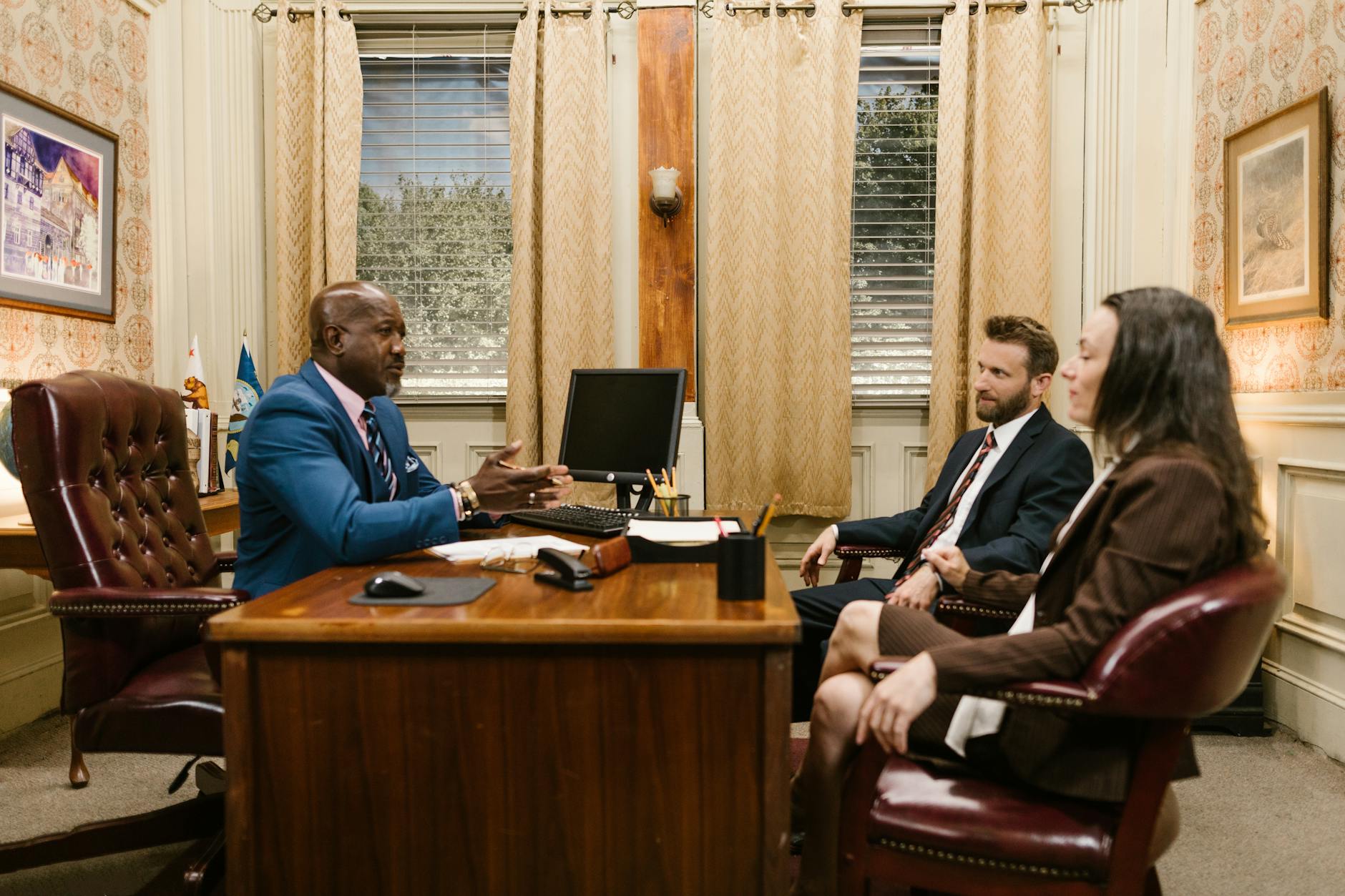
She told me the number in the first ten minutes.
Fourteen hours a week. That's what her team was spending on manual data entry, chasing invoice approvals, and copy-pasting client updates between five different tools. Fourteen hours. Every single week.
She wasn't complaining. She'd just accepted it as normal.
That's the conversation I have on almost every discovery call. Not "we need AI." More like: "we're drowning, and someone told us AI might help." That's where AI consulting for small businesses actually starts - not with a pitch deck, not with a chatbot demo, but with that fourteen-hour number.
Here's what the engagement actually looks like. The before, the after, and what it costs.
What AI Consulting for Small Businesses Actually Involves
I know what you're thinking. "Consulting" sounds like a big firm, a big invoice, and a slide deck full of buzzwords that never touches your actual business.
That's the big-firm version. For a business with 5 to 50 people, it's different.
AI consulting at this scale is about finding where your team is doing work that a machine could do - and building the thing that does it. Not recommending tools. Not dropping a 40-page report. Actually building it.
A proper engagement covers three things:
Audit - Where's the time going? What's repetitive, manual, and error-prone?
Strategy - What do we fix first? What will move the needle fastest?
Implementation - Build the automations, train the team, get it running
According to McKinsey, 88% of organisations are now using AI in at least one function. The gap between businesses that have done this work and businesses that haven't is growing fast.
If you're not sure where you stand, read this first: AI Readiness Assessment - What It Is and Why You Need One.
The Before: Where Most Small Businesses Are Right Now
Back to the client. Let's call her Maria. She runs a 12-person professional services firm in London.
Before we worked together, her week looked like this:
Monday: manually pulling reports from three separate systems into a Google Sheet
Tuesday through Thursday: her ops lead spending 2 hours a day chasing approvals via email
Friday: someone on the team rebuilding the same client update email from scratch. Again.
She'd tried a few tools on her own. A Zapier integration that half-worked. A chatbot that confused her clients. A consultant who charged her £3,000 for a strategy document she couldn't implement.
Sound familiar?
This is where most small businesses are. Not behind. Not broken. Just running on manual processes that made sense when the team was four people and they've never been properly replaced.
The freaking irony is that the longer you wait, the more expensive it gets. Not just in time - in missed opportunities. In UK business data from Wingenious, companies using AI grow revenue at 12.2% annually versus 6.5% for non-adopters. That gap compounds.
If you're new to this and don't know where to start, AI for Non-Technical Business Owners breaks it down without the jargon.
The After: What Actually Changed for Maria
Six weeks in. Here's what was different.
The report that used to take 45 minutes on Monday morning? Automated. It runs overnight and lands in her inbox ready to review. The approval chasing? An automated workflow now handles the reminders, tracks responses, and escalates anything overdue. The client update email? A template the system populates from live project data. Takes her ops lead four minutes instead of two hours.
Total time saved: 11 hours a week across the team.
That's the equivalent of one extra part-time hire. Without the hiring cost, the onboarding, the salary.
The ROI hit within four months. According to The AI Consulting Network, that's actually typical - most small business AI implementations reach positive ROI within 4 to 8 months when targeting high-volume repetitive tasks.
Maria's exact words when we reviewed the numbers: "Why the hell didn't I do this two years ago."
I get it. The answer is usually "because nobody showed you what it could actually look like."
That's what good AI consulting for small businesses does. It shows you.
She told me the number in the first ten minutes.
Fourteen hours a week. That's what her team was spending on manual data entry, chasing invoice approvals, and copy-pasting client updates between five different tools. Fourteen hours. Every single week.
She wasn't complaining. She'd just accepted it as normal.
That's the conversation I have on almost every discovery call. Not "we need AI." More like: "we're drowning, and someone told us AI might help." That's where AI consulting for small businesses actually starts - not with a pitch deck, not with a chatbot demo, but with that fourteen-hour number.
Here's what the engagement actually looks like. The before, the after, and what it costs.
What AI Consulting for Small Businesses Actually Involves
I know what you're thinking. "Consulting" sounds like a big firm, a big invoice, and a slide deck full of buzzwords that never touches your actual business.
That's the big-firm version. For a business with 5 to 50 people, it's different.
AI consulting at this scale is about finding where your team is doing work that a machine could do - and building the thing that does it. Not recommending tools. Not dropping a 40-page report. Actually building it.
A proper engagement covers three things:
Audit - Where's the time going? What's repetitive, manual, and error-prone?
Strategy - What do we fix first? What will move the needle fastest?
Implementation - Build the automations, train the team, get it running
According to McKinsey, 88% of organisations are now using AI in at least one function. The gap between businesses that have done this work and businesses that haven't is growing fast.
If you're not sure where you stand, read this first: AI Readiness Assessment - What It Is and Why You Need One.
The Before: Where Most Small Businesses Are Right Now
Back to the client. Let's call her Maria. She runs a 12-person professional services firm in London.
Before we worked together, her week looked like this:
Monday: manually pulling reports from three separate systems into a Google Sheet
Tuesday through Thursday: her ops lead spending 2 hours a day chasing approvals via email
Friday: someone on the team rebuilding the same client update email from scratch. Again.
She'd tried a few tools on her own. A Zapier integration that half-worked. A chatbot that confused her clients. A consultant who charged her £3,000 for a strategy document she couldn't implement.
Sound familiar?
This is where most small businesses are. Not behind. Not broken. Just running on manual processes that made sense when the team was four people and they've never been properly replaced.
The freaking irony is that the longer you wait, the more expensive it gets. Not just in time - in missed opportunities. In UK business data from Wingenious, companies using AI grow revenue at 12.2% annually versus 6.5% for non-adopters. That gap compounds.
If you're new to this and don't know where to start, AI for Non-Technical Business Owners breaks it down without the jargon.
The After: What Actually Changed for Maria
Six weeks in. Here's what was different.
The report that used to take 45 minutes on Monday morning? Automated. It runs overnight and lands in her inbox ready to review. The approval chasing? An automated workflow now handles the reminders, tracks responses, and escalates anything overdue. The client update email? A template the system populates from live project data. Takes her ops lead four minutes instead of two hours.
Total time saved: 11 hours a week across the team.
That's the equivalent of one extra part-time hire. Without the hiring cost, the onboarding, the salary.
The ROI hit within four months. According to The AI Consulting Network, that's actually typical - most small business AI implementations reach positive ROI within 4 to 8 months when targeting high-volume repetitive tasks.
Maria's exact words when we reviewed the numbers: "Why the hell didn't I do this two years ago."
I get it. The answer is usually "because nobody showed you what it could actually look like."
That's what good AI consulting for small businesses does. It shows you.
What AI Consulting for Small Businesses Costs - and What It Returns
Look, let's talk numbers. Because this is where most people hesitate.
A basic AI strategy engagement for a 5-50 person business in the UK runs between £2,500 and £8,000 depending on scope. A full implementation - where someone actually builds the automations and gets them running - is typically £5,000 to £15,000.
Big firm rates? Higher. Much higher.
At Oloxa, I work as an independent AI implementation consultant. That means no overhead, no account managers, no markup. You pay for the work, not the brand name.
Here's how I'd think about the return:
If your team is losing 10 hours a week to manual processes, and your average fully-loaded employee cost is £30/hour, that's £300 a week. £15,600 a year. A £7,000 implementation that eliminates that pays for itself in under six months.
That's not a sales pitch. That's arithmetic.
UK research from Wingenious puts early-adopter ROI at an average of 42%. But the businesses that see THAT kind of return aren't the ones who bought a tool. They're the ones who had someone map their actual processes and build something that fits.
The difference between AI consulting services from a London-based independent versus just buying subscriptions? The consultant builds it FOR your business. Not a generic solution. Not a template.
For small businesses with 5 to 50 employees, the sweet spot is usually one focused project - one core process automated properly - rather than trying to do everything at once. Get one win. See the ROI. Go from there.
That's the honest version of how this works.
FAQ: AI Consulting for Small Businesses
What does an AI consultant actually do for a small business?
An AI consultant for small businesses maps your existing processes, identifies which tasks are costing the most time or money, and then builds or implements the automations that eliminate those bottlenecks. Unlike larger firm engagements, small business AI consulting is hands-on - you get someone who builds the thing, not just recommends it.
How much does AI consulting for small businesses cost in the UK?
AI consulting for small businesses in the UK typically ranges from £2,500 for a focused audit and strategy session up to £15,000 for a full implementation that includes building and deploying automations. Independent AI implementation consultants tend to cost significantly less than large agencies while delivering the same - often better - outcomes.
How long does it take to see ROI from AI consulting?
Most small businesses see measurable ROI within 4 to 8 months of implementation, particularly when the project targets high-volume repetitive tasks like data entry, approvals, and reporting. Some see efficiency gains within weeks of go-live.
Is AI consulting worth it for a business with under 20 employees?
Yes - and sometimes ESPECIALLY so. Smaller teams feel manual process bottlenecks more acutely. Eliminating 10 hours of weekly admin work in a team of 12 is proportionally a much bigger gain than in a 200-person company. The key is scoping the project to match your budget and picking the highest-impact process first.
What's the difference between an AI consultant and an AI strategy consultant?
An AI strategy consultant focuses on planning - the roadmap, the tools, the recommendations. An AI implementation consultant actually builds and deploys the solutions. For small businesses, you usually want someone who does both: maps the strategy AND builds the thing. A strategy doc with no implementation is just an expensive PDF.